

What is a prayer journal?
Through prayer, we can speak with the Creator of the universe. What a privilege! We can freely approach God and have a conversation with Him. Now, have you ever considered writing down those conversations? A prayer journal is just that, a personal record of your prayers.
This practice is not new. In fact, it is both a biblical practice and one historically used by prominent Christian figures. For instance, the Bible contains records of several written prayers, such as King David’s prayer of repentance in Psalm 51, Hannah’s prayer in 1 Samuel 2:1-10, and Jeremiah’s prayer in Lamentations 3:55-66. Additionally, many well-known Christians, such as George Müller, kept a prayer journal as a tangible record of God’s faithfulness in their lives.
“I have recorded my petitions that when God has answered them, His name will be glorified.”
George Müller
Prayer journaling has been helpful to countless Christians in their walk. And like them, you can certainly benefit from journaling your prayers. In this post, I will share with you practical steps to start a prayer journal today.
How to start a prayer journal?
Tools to start a prayer journal
You do not need much. Chances are, you already have all you need to start your prayer journaling journey.


All you need is a notebook and a pen. No need for a fancy Moleskine journal and an expensive fountain pen. A good old Composition notebook and Bic pen will do the trick. If you already have fancy supplies, you may use them. However, I strongly discourage you from purchasing an expensive journal in the beginning. The novelty of a fancy journal wears off fast. On top of that, you will likely be too afraid to ruin it. Your focus should be on the journaling process, not the aesthetic of your journal. Once you’ve developed the habit of journaling your prayers, you may upgrade your supplies, but not before that.
If you are a digital native, you can use a note-taking app like Notes, which comes with any iOS device. Again, you do not need to purchase an app just to do this. And don’t waste your time finding the perfect note-taking app. Just use the note-taking app that comes with your device.
Just start!
Make time to prayer journal
Although it’s easy to start, the hardest part is consistency. If you are new to prayer journaling, find a quiet place and set a time specifically to prayer journal. Don’t forget to turn off your notifications.
If you are just beginning, set 15 minutes as a starting point and adjust as you build the habit of prayer journaling.
Building a new habit will not be easy. To help you, I suggest anchoring it with an already established habit, like after your daily Bible reading or after your evening skin care routine.
That said, I want to caution you against a legalistic mindset. Condemning yourself for missing a day or two is not helpful. On the contrary, self-condemnation is not of God. Believers have freedom in Christ, and prayer journaling is not meant to burden you, but help you. If your schedule makes it difficult to journal every day, then do it three days/week. If you fail to be consistent, bring it to God, say you’re sorry, and ask Him to help you be more disciplined.
How to write in your prayer journal
Now that you have a prayer journal and a set time to write, you may feel uncertain about how to write. If this is your first time journaling, you may be tempted to write in a more formal or literary style.
My advice is just to be yourself. It’s cliché, but it is true. Write your prayers in a way that feels natural to you. If your writing is not as eloquent as you would like it to be, that’s ok. You are not keeping a prayer journal to pass a literature class. You are writing to your Father in heaven, not an English professor. God already knows you, and He wants you to come to Him as you are without pretense. So, forcing yourself to write in an unnatural way defeats the purpose of prayer journaling.
Do not be too hung up on grammar or spelling mistakes. If you want to blot out a mistake and rewrite it, do so. A prayer journal does not need to be Pinterest-worthy. God looks at the heart (1 Samuel 16:7).
What to write in your prayer journal
There are two prayer journal formats you can try: guided and a free-form prayer journal.
Guided prayer journal
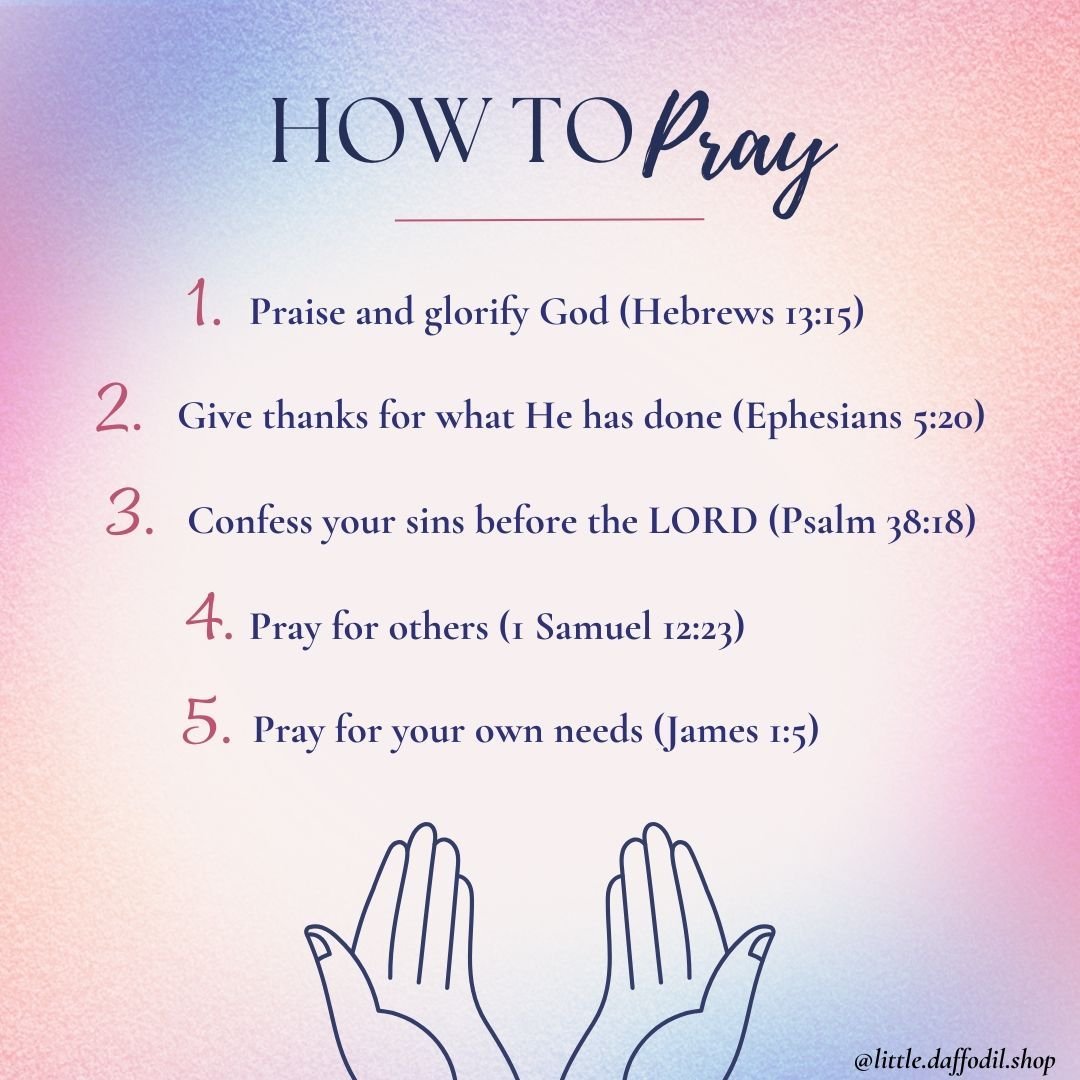
Guided prayer journals include prompts or instructions that serve as a framework for your prayers. This is particularly useful if you are new to prayer journaling. Here are a few examples of prompts:
- What am I most thankful to God for today?
- Who in my life needs prayer today?
- What prayer has God answered recently?
The ACTS prayer method is a template that I particularly recommend for newbies. ACTS stands for: Adoration, Confession, Thanksgiving, and Supplication. I personally like this template because it encourages you to be more balanced in your prayer. We want to have a conversation with God, not a long list of complaints and requests that ends up treating Him like a genie in a bottle. In contrast, the ACTS prayer method frames your perspective by:
- Acknowledging God first for who He is, appreciating His holiness and majesty.
- Confessing our sins, reminding us of our need for His grace.
- Thanking Him for all the blessings He bestows on us, reminding us of His goodness.
- Presenting our requests to Him.
Free-form prayer journal
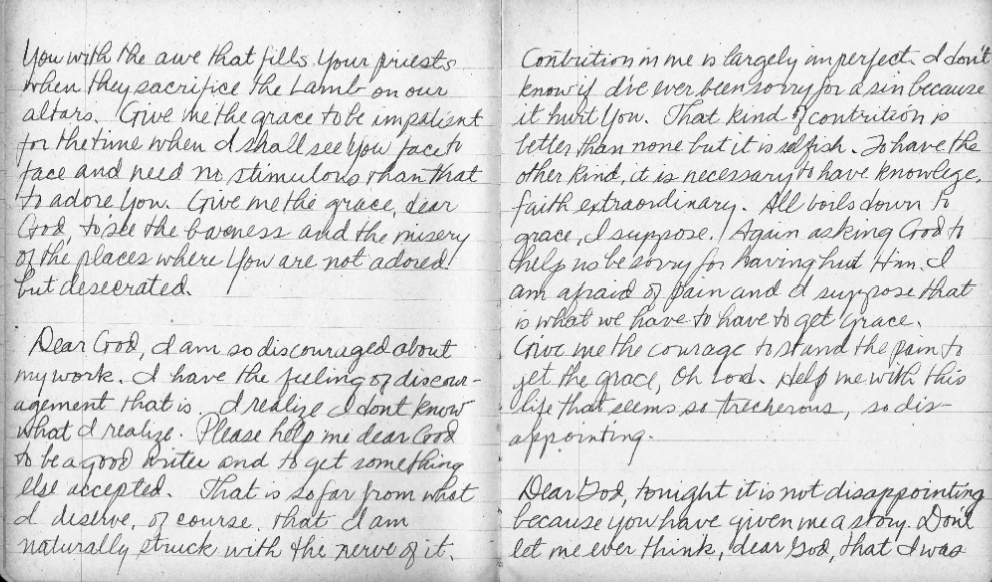
The free-form prayer journal allows you to freely write your prayer as the Holy Spirit leads. It is like writing a letter to God. And as you write, you can open up to Him in a way that you couldn’t in your spoken prayers. Writing allows you to slow down and process your thoughts and feelings, making your prayers more heartfelt. God is faithful, and you can confide in Him as David said in Psalm 62:8.
Take a look at what Flannery O’Connor, a Christian writer and essayist, says in her prayer journal:
Oh God, … I do not mean to deny the traditional prayers I have said all my life; but I have been saying them and not feeling them. My attention is always very fugitive. This way I have it every instant. I can feel a warmth of love heating me when I think & write this to You. — Flannery O’Connor, A Prayer Journal
Final word
I hope I have provided all you need to start a prayer journal today. Set a time, find a quiet place, turn off your notifications, and write to God. Write the best way you know how without pretense. If you are a beginner, I recommend using a guided format instead of a free-form prayer journal; this is my recommendation, not a rule set in stone. You are free to explore different formats and prayer templates to find what works best for you. And as you develop the habit of prayer journaling, you will see your relationship with God grow deeper than you could ever imagine.